
In communities like Wadena, we take pride in looking out for one another. Whether it’s helping a neighbor after a storm or showing up for a local fundraiser, we value personal responsibility and protecting our families.
That same principle applies to immunizations.
Right now, our community’s vaccination rates are lower than what’s needed to prevent the spread of certain diseases—especially measles. That means we no longer have what’s called “herd immunity,” where enough people are protected to stop an outbreak before it starts.
And with measles, that matters.
Myth #1: “Measles isn’t a big deal anymore.”
Measles isn’t just a rash—it’s one of the most contagious viruses known. It spreads through the air and can linger in a room even after someone has left. In unvaccinated populations, it spreads quickly.
Outbreaks are already happening again in parts of the U.S. When vaccination rates drop, measles comes back. It’s that simple.
Myth #2: “If I’m healthy, I don’t need to worry.”
Even healthy people can get measles—and spread it to others before they know they’re sick.
The bigger concern is who you might unknowingly pass it to:
- Infants who are too young to be fully vaccinated
- Older adults
- People going through cancer treatment or with weakened immune systems
For them, measles can lead to serious complications.
Myth #3: “I probably got the vaccine already.”
Many people did—but not everyone is fully protected. Here’s a simple breakdown of who may need the MMR (measles, mumps, rubella) vaccine:
- Children should receive two doses: one at 12–15 months and another at 4–6 years
- Teens (7–18) who missed doses should get caught up (2 doses total)
- Adults born before 1957 are generally considered immune
- Adults born after 1956 may need:
- 1 dose if low risk
- 2 doses if higher risk (healthcare workers, college students, international travelers, or those around immunocompromised individuals)
- Some adults vaccinated between 1963–1967 may need to be revaccinated
Myth #4: “We’ll deal with it if something happens.” 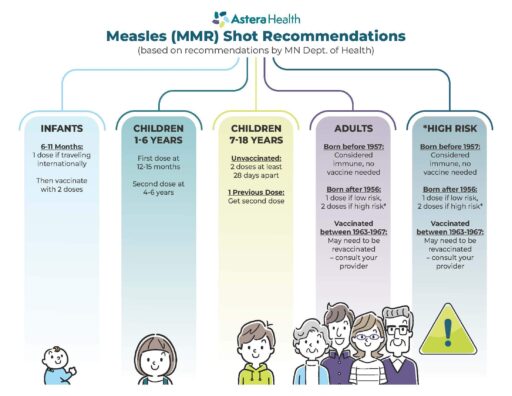
The reality is: by the time measles shows up, it’s already spreading.
Our infection prevention team is actively preparing—not because we want to alarm anyone, but because we want to stay ahead of it. In a community without strong herd immunity, outbreaks move fast.
During an outbreak, recommendations can change quickly, including:
- Early vaccination for infants as young as 6 months
- Additional precautions for those at higher risk
What This Really Comes Down To and Why Immunizations Matter
This isn’t about politics or pressure. It’s about being informed and making the best decision for your family—and your neighbors.
Vaccination is one of the simplest ways to:
- Protect your household
- Keep schools and workplaces open
- Prevent avoidable illness in the most vulnerable
Not Sure Where You Stand?
That’s okay, many people aren’t.
Talk to your healthcare provider. We can:
- Review your vaccination history
- Help you understand your risk
- Answer questions without judgment
A Community That Takes Care of Its Own
Wadena has always been a place where people step up when it matters.
This is one of those times.
Schedule an appointment with your primary care provider to discuss where you are at in your immunizations.